理解自我的最佳方式:造一个机器人
今天读到这篇文章,作者提出一个大胆的假设:理解人类自我的最佳途径,不是内省,而是尝试构建一个机器人自我。
这篇文章的科学观点与佛教”无我”(Anatta)的教义有着惊人的相似之处。文章指出大脑中没有一个中心点或永恒的”我”——这与佛教”无我”的核心观点一致,也就是不存在一个独立、永恒、自主的灵魂或本质(Atman)。作者将自我描述为由多个大脑网络互动产生的”虚拟结构”,而佛教则认为所谓的”我”只是”五蕴”(色、受、想、行、识)的暂时聚合。
我们本质上是高明的”角色扮演者”,在构建、维持和表演一个关于自我的概念。
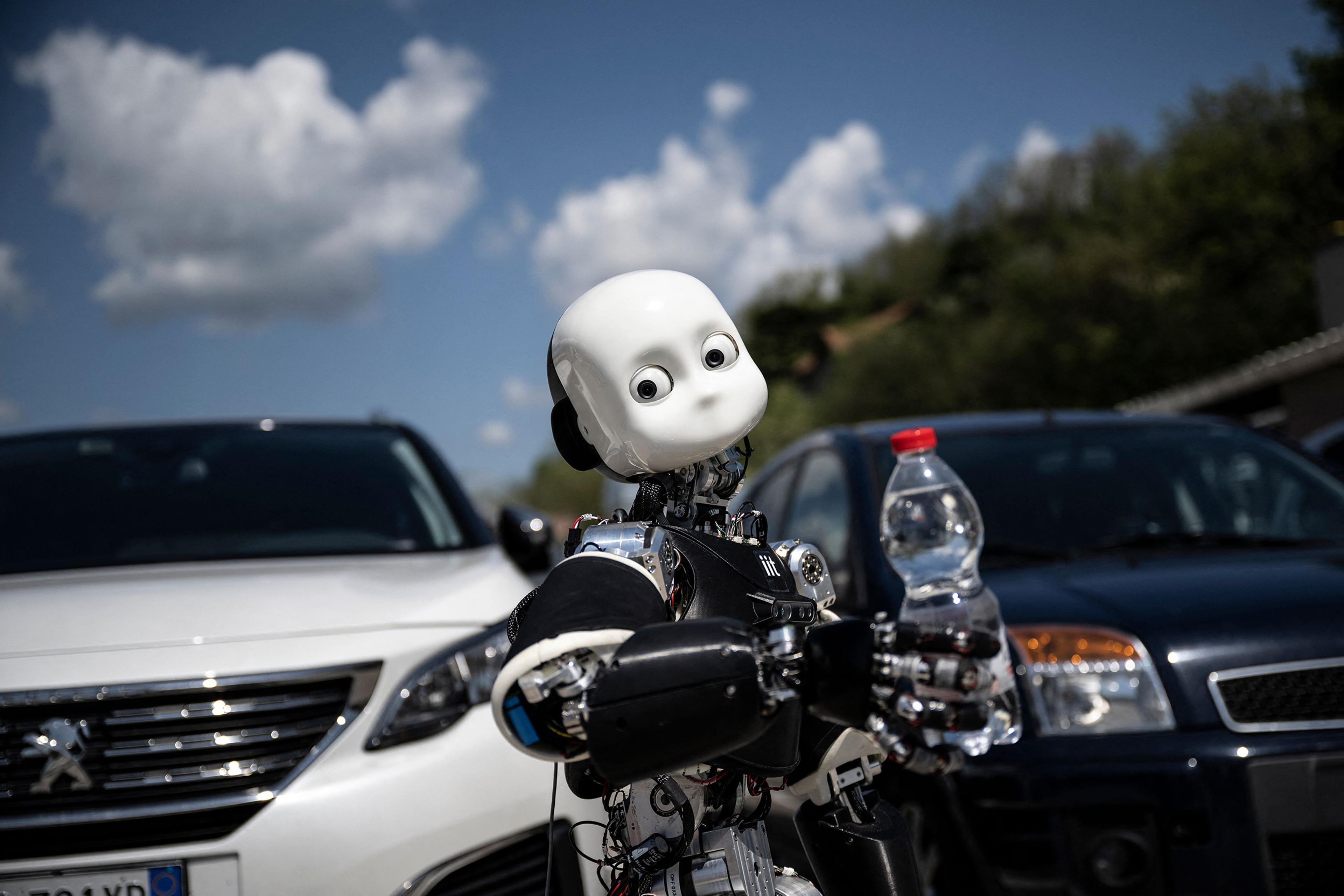
原文摘录
Whatever I may be thinking of, I am always at the same time more or less aware of myself, of my personal existence. At the same time it is I who am aware; so that the total self of me, being as it were duplex, partly known and partly knower, partly object and partly subject, must have two aspects discriminated in it, of which for shortness we may call one the Me and the other the I.
无论我在想什么,我总是或多或少地同时意识到 自己 、我的 个人存在 。同时,正是 我 在意识着;因此,作为“双重”的自我,我既是部分已知的,又是部分知觉者,既是部分客体,又是部分主体,必须在其中区分出两个方面,我们可以简称为 我(Me) 和 之 我(I) 。
– from Psychology: Briefer Course (1894) by William James
——摘自威廉·詹姆斯《 简明心理学 》(1894)
What is the self? The human condition is defined by our awareness that we are distinct from the world, that we are, in some way, the same person from day to day, even though our bodies change, and that the people around us are also selves. But we still do not really know what we are. As William James explained more than a century ago, the dual nature of the self lies at the heart of the mystery – the self is this most unusual thing, in that it is both the perceiver of itself and the content of what it perceives. Right now, for instance, ‘I’ can sense ‘my’ fingers as they type. I can also see a screen on which my words appear, and, if I choose, I can focus instead on the rims of my glasses, which move as my head moves. Interestingly, ‘my’ can refer not just to body parts but to things I wear, think or do. Although the skin is an important boundary between self and not-self, the self is more than just the physical body – it is also a set of ideas about who and what I am.
什么是自我?人类的存在状态定义于我们对自身与世界区别的觉知,即在某种程度上,我们是同一个“自我”,尽管身体在变化,而周围的人也是“自我”。然而,我们仍然不真正了解自己是什么。威廉·詹姆斯(William James)一个多世纪前就解释过,自我双重的本质是谜团的核心——自我是最不寻常的事物之一,因为它既是自身的感知者,又是被感知的内容。例如,此时此刻,“我”可以感知“自己的”手指在敲击键盘。我也可以看到屏幕上显示的文字,或者选择关注眼镜框的边缘,它们随着头部移动而移动。有趣的是,“我的”不仅指身体部位,还包括我所穿戴、思考或所做的事物。虽然皮肤是自我与非我的重要边界,但自我不仅仅是物理身体——它也是关于“ 我是谁 ”的一系列观念。
With the advent of generative artificial intelligence (genAI) that can converse fluidly in the first person, people are asking whether such AIs might someday have a sense of self. Indeed, might they have one already? (OpenAI’s GPT-5, perhaps reassuringly, says it does not.) This question is hard to answer for several reasons, but particularly because we still lack a good understanding of the human self. Significant progress is being made, however, through philosophical, psychological and neuroscientific investigations, and most recently by an approach that I and others have been exploring – the attempt to create or synthesise a sense of self in robots.
随着能够流畅以第一人称交流的生成式人工智能(genAI)的出现,人们开始质疑这些AI是否有一天会拥有自我意识,甚至是否已经拥有。例如,OpenAI的 GPT-5 (或许让人安心的是)声称它并不具备自我意识。这个问题之所以难以回答,原因有多种,但最关键的一点在于我们对人类自我意识的理解仍然不够深入。不过,通过哲学、心理学和神经科学的研究,特别是通过我和其他研究者正在探索的方法——尝试在机器人中创造或 合成 自我意识——我们正在取得显著进展。
Based on what we have learned, I believe a foundational aspect of the human self is that we have physical bodies, and that our experience emerges from a fundamental distinction between what is, and what is not, a part of the ‘embodied’ me. If this is true, then a disembodied AI could never have a sense of self similar to our own. However, for robots that inhabit our physical world through a body – even one quite different to our own – the bets may be off.
基于我们已有的认知,我认为人类自我的一个基础方面在于我们拥有物理躯体,而我们的体验源于对“被肉身包裹的我”与“非我”的根本区分。如果这是事实,那么失去肉身的AI永远无法拥有与我们相似的自我的感知。然而,对于那些通过某种形式的躯体(即使与我们的躯体大相径庭)存在于我们物理世界中的机器人来说,情况可能会 完全不同 。
T o understand the motivation for building synthetic selves, we first need to explore how philosophers and scientists have sought to interrogate the human self’s nature. One part of the puzzle is that I feel as though there is a centre of experience, somewhere in my head and behind my eyes. Although it is tempting to see this as the seat of the ‘I’, this turns out to be an unhelpful idea since, as the philosopher Daniel Dennett points out in Consciousness Explained (1991), this invites an infinite regress of inner perceivers. Indeed, contemporary philosophers and neuroscientists are largely in agreement that there is no localised, unchanging, inner ‘I’ somewhere inside my head. This doesn’t mean we should abandon the idea of selves as unscientific or treat the self simply as an illusion or a purely social construct. Instead, we should find a better explanation.
为了理解构建合成自我的动机,我们首先需要探索哲学家和科学家如何试图质疑人类自我的本质。谜团的一部分在于,我感觉仿佛在头部和眼睛后方存在着体验的中心。虽然将其视为‘我’的所在地看起来很有诱惑力,但事实证明这是一个无益的想法,因为正如哲学家丹尼尔·德内特在《 意识解释 》(1991)一书中指出的那样,这会导致内在知觉者的无限回归。实际上,当代哲学家和神经科学家普遍认为,在我的头部内部并不存在一个固定不变的内在‘我’。这并不意味着我们应该放弃自我的概念,认为其不科学,或者将其仅视为一种幻觉或纯粹的社会建构。相反,我们应该寻找一个更好的解释。
If the self is not a localised inner perceiver, then what is it, and how are we to reconcile the two sides of James’s self, one of which is the perceiver of the other? One way to start to answer this question is to deconstruct the self. For instance, we can ask what are the different psychological phenomena that relate to, or demonstrate, selfhood, and where and how do they rely on specific brain regions or networks. In this way, the human self can be deconstructed, understood, and then reconstructed from its various parts.
如果自我不再是一个局部化的内在知觉者,那么它是什么,我们又如何调和詹姆斯自我的两面性,其中一方是另一方的知觉者呢?回答这个问题的一种方法是分解自我。例如,我们可以问:有哪些不同的心理现象与自我相关或展示自我,以及它们依赖于大脑的哪些特定区域或网络。通过这种方式,人类自我可以被分解、理解,然后从其各个部分重新构建。
To begin with, consider that some patients in neurological clinics have been found to have a disordered sense of body ownership, where they regard a hand or limb as not their own. Typically, these patients have been found to have endured damage to the right-hand side of the brain in a specific region around the border of the temporal and parietal cortices. Patients with schizophrenia, meanwhile, may show disorders of agency whereby thoughts or actions are experienced as being controlled by someone else. Current theories point to brain networks that predict the sensory outcomes of your own actions, suggesting that these are altered in these patients. Damage to the insular cortex, one of the oldest cortical regions that is deeply involved in interoception (processing signals from the body), can lead to a sense of emotional disconnection from the self, and is implicated in the self-related disorders of depersonalisation or derealisation. Other forms of damage, for example to the temporal and frontal cortices of the brain, can impact the experience of the self as enduring in time, or the capacity to see the world from another person’s perspective.
首先,考虑一些在神经学诊所中发现的患者,他们被发现具有 身体所有权 的紊乱感,即认为一只手或肢体不是自己的。通常,这些患者被发现患有大脑右侧特定区域的损伤,该区域位于颞叶和顶叶皮质的边界附近。另一方面,患有精神分裂症的患者可能会出现 代理感 障碍,即思想或行为被体验为由他人控制。目前的 理论 指出,大脑网络预测自身行为的感官结果,暗示这些网络在这些患者中发生了变化。损伤到岛叶皮质(一种深度参与内感受的古老皮质区域)可能会导致情感上与自我的断裂感,并且与 脱人症 或 失真症 等与自我相关的障碍有关。其他形式的损伤,例如大脑颞叶和前额叶皮质的损伤,可能会影响对自我的 持续性 体验,或者 从 他人的角度看世界的能力。
Our nervous and sensory systems are encapsulated within our bodies and skulls
我们的神经和感官系统被包裹在身体和颅骨内
Another approach to deconstructing the self is to ask: how do these different phenomena emerge during early childhood? Let’s begin with the infant self. Although we cannot question infants directly, developmental psychology has found ways to probe self-perception in newborns. The evidence we have so far suggests we are each born with a basic self/other distinction – knowing what is, and what is not, part of our body. We also rapidly gain an understanding of our own agency, and when we have caused something to happen. However, the experience of the self as persisting in time is something that emerges much more gradually, as is our ability to conceive of others as having selves. Indeed, it may not be until age four or five that children have a sense of self that begins to resemble what we experience as adults.
分解自我的另一种方法是问:这些不同的现象在早期儿童阶段如何出现?让我们从婴儿自我的角度开始。虽然我们无法直接询问婴儿,但发展心理学已经 发现 了探索新生儿自我知觉的方法。迄今为止的证据表明,我们每个人天生就具有基本的自我/他人区分能力——知道什么是自己身体的一部分,什么不是。我们也迅速获得了对自身代理感的理解,以及当我们 引发 某事发生时。然而,自我作为时间中持续存在的体验是逐渐形成的,我们能够 想象 他人拥有自我的能力也是如此。实际上,直到四五岁,儿童才开始具有类似成年人体验的自我感。
Of the many important changes during development, the acquisition of language and of culture are central in shaping our adult experience of self. Indeed, at the conceptual level, the mature sense of self derives in part from ideas and beliefs about ourselves that we abstract from memory or acquire from others. This ‘narrative’ aspect of the self is the one on which notions of human identity typically depend, and it also emerges in the story we tell ourselves and others about who we are.
在发展过程中,许多重要的变化中,语言和文化的获得在塑造我们成年人的自我体验中起着核心作用。实际上,在概念层面上,成熟的自我感部分源自我们从记忆中抽象出来的关于自身的想法和信念,或者从他人那里获得的想法。这种 ‘叙事’ 方面的自我是人类身份 概念 通常依赖的部分,它也体现在我们自己和他人关于 我们是谁 的故事中。
That there are different, and perhaps simpler, experiences of self in infancy, has led philosophers, including Dennett and Shaun Gallagher, to define a ‘minimal self’. This involves just the senses related to body ownership and agency, with no awareness of the self as persisting in time, or as something that can be thought about (self-reflection). The neuroscientist Jaak Panksepp and the neurologist Antonio Damasio each suggest that something similar to this minimal self arises from activity in sub-cortical areas of the human brain. These are some of the earliest brain regions to mature in newborns. These are also parts of the brain that have changed less in evolution than the cerebral cortices, and so are similar in other vertebrate animals. In other words, other animals with a backbone also likely have (at least) a minimal sense of self.
婴儿时期存在不同且可能更简单的自我体验这一事实,促使哲学家,包括丹尼尔·德内特和肖恩·加洛韦, 定义 了一个‘最小自我’。这仅涉及与身体所有权和代理感相关的感官,没有对自我的时间持续性或可思考性(自我反思)的意识。神经科学家贾克·潘克塞普和神经学家安东尼奥·达马西奥分别 提出 ,类似于这种最小自我的东西 源自 人类大脑皮质下区域的活动。这些是新生儿中最早成熟的大脑区域之一。这些也是在进化过程中比大脑皮质变化较少的大脑部位,因此与其他脊椎动物相似。换句话说,其他脊椎动物也可能具有(至少)一种最小的自我感。
So why did something like the minimal self evolve in our animal ancestors? Because, by structuring and organising experience, it promotes survival. First, by separating sensory signals that relate to the body from those that do not, an animal can better distinguish which parts of the physical world need to be protected and defended. To consider just one critical consequence, this prevents a hungry animal from trying to eat itself. Second, by identifying whether sensory signals are related to its own internally generated actions, an animal can distinguish events it has caused from those that are happening around it. For instance, an electric fish can detect whether a small disturbance in the electric field surrounding its body was generated by the flick of its own tail or by the movements of a prey animal. This allows the fish to distinguish a feeding opportunity from routine swimming. Partitioning the sensory world in this way – creating a self/other distinction – is surely a useful starting point for succeeding in life as an embodied intelligence.
那么,为什么我们的动物祖先会进化出最小化的自我的概念呢?因为,通过对经验进行结构化和组织化,** 促进 ** 生存。首先,通过将与身体相关的感官信号与不相关的信号区分开来,动物能够更好地区分物理世界中哪些部分需要被保护和防御。仅以一个关键后果为例,这可以防止饥饿的动物试图吃掉自己。其次,通过识别感官信号是否与自身产生的内部动作相关,动物能够区分自己造成的事件与周围发生的事件。例如,电鱼能够检测到其身体周围电场中的微小扰动是由自身尾部的抖动产生,还是由猎物的运动引起。这使得鱼能够区分觅食机会与日常游泳。以这种方式划分感官世界——创造自他区分——对于作为具身智能的个体在生活中取得成功,肯定是一个有用的起点。
According to this view, the emergence of the full human self, which builds on this minimal foundation, is a consequence of our bounded nature. More specifically, I would argue that our human sense of self takes the form that it does largely because we, like other animals, are physically enclosed by our body surfaces, and our nervous and sensory systems are encapsulated within our bodies and skulls. In humans, this minimal self gives us our primary experience of owning our own bodies and of having agency over our actions.
根据这一观点,完整的人类自我的出现,是在最低限度的基础上建立起来的,是我们有限性的结果。更具体地说,我会认为,我们的人类自觉之所以呈现出这种形式,很大程度上是因为我们——与其他动物一样——被身体表面所包围,而我们的神经和感官系统则被封闭在身体和颅骨内。在人类身上,这种最小化的自觉赋予了我们对自身身体的初级体验,以及对自身行为的主体感。
T o explore this further, it will help to be a bit more specific about what I understand the self to be. For Dennett, writing in ‘The Origin of Selves’ (1989), the minimal self is an ‘organisation which tends to distinguish, control and preserve parts of the world’. This makes the self a virtual entity even though it is realised through physical processes in the body and brain. Following the philosopher Thomas Metzinger in Being No One (2003), we might also describe the human self as a mental model – a virtual structure that captures, organises and manipulates percepts, memories, feelings and facts related to the embodied ‘me’. This self-model is instantiated by a cluster of brain networks, closely integrated with other bodily processes, and becomes active during wakefulness but is inactive during deep sleep or general anaesthesia.
为了进一步探讨这一点,更具体地理解我对“自我的”定义有助于理解。丹尼特在《自我的起源》(1989)一书中提出,最小化的自我是一个“能够区分、控制并保存世界部分的组织”。这使得自我成为一种 虚拟 实体,尽管它是通过身体和大脑中的物理过程实现的。借用哲学家托马斯·梅辛格在《无人》(2003)中的观点,我们还可以将人类自我看作一种 心智模型 ——一种虚拟结构,用于捕捉、组织和操纵与具身化的“自我”相关的知觉、记忆、情感和事实。这种 自我模型 由一组大脑网络实现,与其他身体过程密切整合,在清醒时活跃,但在深度睡眠或全身麻醉期间则处于静止状态。
The synthetic approach can help us tackle problems that have vexed philosophers and neuroscientists
通过合成方法,我们可以帮助解决那些长期困扰哲学家和神经科学家的问题
As we have seen, there are multiple brain substrates involved in the self’s construction, some early maturing, some partially overlapping. These different networks interact and integrate to provide a coherent experience of self – something that both evolutionary biology and psychological science can help us understand. Various forms of self-disintegration are also possible due to different neuropsychological conditions – which studies of neurodiversity can illuminate.
正如我们所见,自我构建涉及多个大脑底层结构,其中一些早期成熟,一些部分重叠。这些不同的神经网络相互作用并整合,以提供一种关于自我的连贯体验——这正是进化生物学和心理学科学可以帮助我们理解的内容。由于 不同 的神经心理条件,各种形式的自我解体也是可能的——而神经多样性研究可以对此进行阐释。
However, I believe it is also useful to explore what I call the synthetic approach, that is, to understand the self by trying to build one. The hypothesis that the self is virtual – a mental model – also lends itself to this strategy.
然而,我认为探索我所称的 合成方法 同样有益,也就是说,通过尝试构建一个来理解自我。自我是虚拟的这一假设——即一种心理模型——也适用于这一策略。
The synthetic approach can help us tackle various problems that have vexed philosophers and neuroscientists. Although the self is not itself a physical entity, to construct a sense of self that might be similar to our own, I believe we require, at minimum, an artificial system that has a physical body, that can sense the world directly, and that can act. In other words, a robot.
通过综合方法,我们可以帮助解决各种困扰哲学家和神经科学家的问题。尽管“自我”本身并非物理实体,但为了构建一个与我们自身相似的自我感知,我认为至少需要一个人工系统,该系统应具备以下特征:拥有一个物理躯体、能够直接感知世界,并且能够行动。换句话说,就是一个机器人。
L et’s start with the challenge of distinguishing ‘me’ from ‘not-me’, a capacity that is central to constructing the minimal self and that relies on being able to sense both the body and the world. Most robots today have sensory capacities that allow them to internally sense their own hardware. Particularly commonplace is the capacity to detect the positions of body parts and joints, and measure the velocities of the motors that move them. This is similar to the human internal sensory capacity we call proprioception. Some robots also have tactile sensors on their surfaces that provide a form of artificial skin, allowing them to directly sense contact with the world at their boundaries. Robots with distal sensors, such as cameras and microphones, immediately have a ‘point of view’ at least in the most literal sense of the phrase. That is, there is a position and pose in the world that they occupy at any moment that defines and limits what they can sense. When the robot is occupying that position, no one and nothing else can.
我们可以从区分“自我”与“非自我”的挑战开始,这一能力是构建最小化的自我所必需的,并且依赖于感知自身身体和外部世界的能力。当今大多数机器人都具备感知自身硬件的传感能力。特别是,它们能够检测身体部件和关节的位置,并测量驱动这些部件运动的电机速度。这与人类内部感知能力(称为本体感觉)非常相似。一些机器人还在表面配备了触觉传感器,提供一种人工皮肤,使它们能够直接感知边界处与外部世界的接触。配备远程传感器(如摄像头和麦克风)的机器人,至少在字面意义上拥有“视角”。也就是说,它们在世界中的某个位置和姿态定义并限制了它们能够感知的范围。当机器人占据该位置时,没有人或物体 其他 能够占据。
These sensory capacities, combined with appropriate processing, can allow robots to begin to make sense of their own embodiment as a first step towards building a self/other distinction. Indeed, many labs have explored how a robot can construct a model of its own morphology (the shape and structure of its body) simply by generating random movements – termed ‘motor babbling’. As an example, the roboticist Josh Bongard and colleagues used genetic algorithms – inspired by biological evolution – to allow a star-shaped robot to learn the configuration of its legs. The robot was then able to discover forms of forward locomotion. Other robots, equipped with jointed arms and hand-like grippers, have used neural network learning algorithms to discover their arm and hand configurations, and apply this knowledge to perform tasks such as reaching for and grasping objects.
这些感知能力,结合适当的信息处理,可以让机器人开始理解自身的身体化(embodiment)作为构建自他区分的第一步。实际上,许多实验室已经探索了机器人如何仅通过生成随机运动—— 被称为 “运动咕哝”(motor babbling)——来构建自身形态(身体的形状和结构)的模型。例如,机器人学家Josh Bongard及其团队 利用 基于生物进化的遗传算法,使一款星形机器人学习其腿部的配置。随后,该机器人能够发现前进运动的形式。其他装备有关节臂和手爪的机器人,则使用神经网络学习算法 发现 其臂和手的配置,并将这一知识应用于诸如伸手抓取物体等任务中。
A composite image of a newly developed robot standing over ‘water’ in which the machine is mirrored as a colourful block figure. By conjuring and using such a simple model of itself, the device can adapt to damage more readily than ordinary robots do. Courtesy Bongard et al, photo by Viktor Zykov (Lipson Lab) 一幅新开发的机器人站在“水”上的合成图像,其中机器人被呈现为一个色彩斑斓的立方体形象。通过想象并使用这种简单的自身模型,该设备能够比普通机器人更快适应损伤。图片来源:Bongard 等人,摄影:Viktor Zykov(Lipson 实验室)
Babies also perform motor babbling, both in the womb and as young infants, before learning to perform more goal-directed reaching movements. Before birth, a baby will use its sense of touch to discover that touching itself provides a different experience to touching the non-self. Specifically, self-touch provides a double touch sensation both on the fingers and on the body. As a result of this experience in the womb, the newborn is already able to make some basic distinctions between self and non-self. For instance, orienting towards a touch on the cheek but not when the contact is made by their own hand. Double touch, as a means of distinguishing self from other, has also been explored in humanoid robots, to allow robots to understand the extent and limits of their embodiment.
婴儿也会进行运动“咿呀学语”,在子宫内和作为幼儿时都会这样做,直到学会进行更具目标性的伸手动作。在出生前,婴儿会通过触觉发现,触摸自身与触摸非自身的体验不同。具体来说,自我触摸会在手指和身体上产生双重触觉感受。由于在子宫内获得的这种体验,新生儿已经能够对自我与非自我做出一些基本区分。例如,当面颊受到触碰时会做出 定向反应 ,但当触碰是由自己的手造成时则不会。作为区分自身与他物的手段,双重触觉也在 人形机器人 中被研究过,以帮助机器人理解其具身化的范围和限度。
They trained the robot, using motor babbling, to construct a representation of its own hand
他们通过运动咕哝(motor babbling)训练机器人,使其构建出自身手部的表征模型
Another way that humans and robots can learn the difference between self and other is through senses such as vision and hearing. For instance, young infants typically spend considerable time looking at their own hands. In my own lab, we have performed soon-to-be-published experiments with a simulated robot showing that directing attention to the hands and arms, while they are moving, can allow learning of a visual self/other distinction. Specifically, correlations between internal proprioceptive signals, and changes in the stream of camera images due to self-movement, allow the robot to segment their visual world into parts that are related to the self (moving body parts) and everything else (the world).
人类和机器人区分“自我”与“他者”的另一种方式是通过感官,例如视觉和听觉。例如,幼儿通常会花费大量时间 注视 自己的双手。在我的实验室中,我们即将发表的一项研究显示,当机器人将注意力集中在移动中的手臂时,可以实现对视觉“自我”与“他者”的区分学习。具体来说,内部本体感受信号与由自身运动引起的相机图像流变化之间的相关性,使机器人能够将视觉世界分割为与“自我”(移动的身体部位)相关的部分和其他一切(世界)。
A simulated robot observing its own hand movements as a means to learn about its own body. Image provided by the author 一个模拟机器人通过观察自身手部动作来学习了解自身身体的方式。图片由作者提供
In the human self, sensory information also underlies its capacity to adapt to change. A now-classic demonstration of this flexibility is the rubber hand illusion (RHI). In a typical experiment, people experience ownership of an artificial hand when they observe it being stroked with a brush in synchrony with brushstrokes made on their own (concealed) hand. Inspired by this, the cognitive roboticist Yuxuan Zhao and colleagues integrated a simplified model of some of the cortical networks involved in human body representation, and that are implicated in the RHI, into the control system of the iCub humanoid. They then trained the robot, using motor babbling, to construct a representation of its own hand. Next, the robot was exposed to a variant of the RHI that has been extensively used with humans and monkeys. Both the robot’s behaviour, and changes in the firing rates of some model neurons, matched those observed in experiments. These results showed that the robot adapted its internal body model to include the new hand, validating the underlying theory of how body ownership is instantiated in the brain.
在人类自身中,感官信息也支撑着其适应变化的能力。一个经典的 示例 是橡胶手幻觉(RHI)。在典型实验中,当人们看到一个假肢被毛刷同步触摸(同时隐藏的真实手也被触摸)时,会产生对该假肢的所有权感。受此启发,认知机器人学家余轩(Yuxuan Zhao)及其团队将人类身体表征相关皮层网络的简化模型(这些网络与RHI相关)整合到iCub类人机器人的控制系统中。他们随后通过运动咕哝(motor babbling)训练机器人构建自身手部的表征模型。接下来,机器人被暴露于一种广泛应用于人类和灵长类动物的RHI变体中。机器人的行为变化以及模型神经元的放电频率变化,与实验观察结果相符。这些结果表明机器人适应了其内部身体模型以包含新的手部,验证了大脑中身体所有权形成的理论基础。
Building synthetic selves can also help us understand the sense of agency, another key characteristic of the minimal self. One well-known theory of agency, known as the comparator model, argues that the brain predicts the sensory consequences of self-generated actions. For instance, when you walk, your brain predicts the sound of your own footsteps, and you feel agency over those sounds. Meanwhile, if you hear footsteps when standing still, the sensory events will be experienced as externally caused. Imbalances in the brain systems involved in making and matching such predictions could explain some disturbances of agency seen in people with schizophrenia, who sometimes experience their actions or thoughts as having been authored by someone else.
构建合成化的自我也有助于我们理解代理感(agency),这是最小自我(minimal self)的另一个核心特征。一种广为人知的代理理论,即“比较模型”(comparator model),认为大脑会预测自我产生的行为所带来的感官后果。例如,当你行走时,大脑会预测自己脚步发出的声音,你也会对这些声音产生代理感。反之,如果你站立不动却听到脚步声,这些感官事件则会被体验为外部引发的。大脑中负责生成并匹配此类预测的系统出现失衡,可能解释为何精神分裂症患者有时会将自己的行为或思想归因于他人。
To test theories of agency, in our research with a motor-babbling robot, we added a second layer to our self-model that allows the robot to predict how the visual world will evolve in the near future. The cognitive roboticist Pablo Lanillos and colleagues have gone a step further. In their study, a humanoid robot used a predictive learning algorithm, based on the comparator model, to distinguish its own mirror reflection from that of an identical robot. Self-recognition was possible because the movements of the robot’s own mirror image were predictable, based on its internal motor signals, while those of the other robot were not. Interestingly, these researchers had to go beyond the core comparator theory to make this work, demonstrating the value of robotics in assessing the sufficiency of theoretical ideas about the self.
为了测试代理理论,在我们与机器人“咿呀学语”研究中,我们在机器人的自模型中增加了一个额外层次,使其能够预测近期视觉世界的演变。认知机器人学家帕布洛·拉尼约斯(Pablo Lanillos)及其同事们更进一步。在他们的 研究 中,一个类人机器人使用基于比较器模型的预测学习算法,区分自身镜像反射与另一个相同机器人的反射。由于机器人自身镜像的运动可通过其内部运动信号预测,而另一个机器人的运动则不可预测,因此实现了自我认知。有趣的是,这些研究人员不得不超越核心比较器理论才能实现这一目标,这证明了机器人学在评估关于“自我”理论的充分性方面的价值。
T he focus of the studies I have described is typically on one behavioural capacity or benchmark, and these robotic systems (predictably) fail when challenged with something beyond that. However, if we assembled and integrated these different ways of body-mapping and sensing, we could construct something close to what philosophers and scientists have described as a minimal self. This could help us to better understand the experience of self in human infants, and perhaps in other animals.
我所描述的研究通常集中在行为能力或基准之一,而这些机器人系统(可预见地)在面对超出该范围的挑战时会失败。然而,如果我们将这些不同的身体映射和感知方式组装并集成起来,我们或许能构建出接近哲学家和科学家所描述的最低限度的“自我”。这有助于我们更好地理解人类婴儿的自我体验,或许还有其他动物的自我体验。
But what about the adult sense of self with which most readers of this article will be more familiar? Again, by decomposing the self into parts, we can begin to see how each of the component systems can be constructed and then brought together.
然而,大多数读者更熟悉的成年人的自我感知又如何呢?同样,通过将“自我”分解为各个部分,我们可以开始理解每个组成系统如何构建,然后如何将它们整合在一起。
One phenomenon that particularly interests me is our capacity to conceive of ourselves as persisting in time – that we have the experience of being the same person yesterday, today, and tomorrow. Psychologists, such as Endel Tulving, have suggested that this aspect of self builds on our capacity for episodic memory (memory for specific events), and on our human ability to mentally ‘time travel’ back to the past or to imagine the future. Brain-imaging studies show that both of these rely on networks that involve the hippocampal system, one of the more slowly maturing components of the human forebrain. Developmental studies show that, while the younger child, from around age two, has some understanding of past and future, a more adult-like idea of time as linear and measurable (with clocks and calendars), emerges only when children reach school age. It is likely that this experience of the self as a persistent entity arises alongside the child’s broader understanding of time itself.
一个特别吸引我的现象是我们能够将自己视为在时间中持续存在的能力——即我们有昨天、今天和明天仍是同一个人这一体验。心理学家如Endel Tulving曾 提出 ,这种自我方面的构建依赖于我们的情节记忆能力(对特定事件的记忆),以及人类能够在心理上 “时光旅行” 回到过去或想象未来的能力。脑成像研究 显示 ,这两种能力都依赖于涉及海马系统的神经网络,后者是人类前脑中发育较慢的组成部分之一。发育研究表明,虽然年幼的儿童(大约从两岁开始)对过去和未来有一定的理解,但只有在儿童达到学龄时,才会出现成年人那样的线性且可测量的时间概念(如时钟和日历), 形成 。可以推测,这种将自我视为持续实体的体验与儿童对时间本身的更广泛理解同时出现。
Robots, unlike humans, have built-in clocks and calendars and can store everything that happens, but more is needed for a human-like sense of the persistent self. For instance, memory is, in part, a retrieval problem. How do you recollect information about the past that is specifically relevant to the present or future? Research in my lab and several others has used AI generative models to begin to construct something like human episodic memory for robots. Rather than retrieve stored episodes directly, these models, like human memory, actively reconstruct past events based on partial cues, quickly retrieving information needed to understand the current scene. The same system, probed in a different way, can also construct possible future scenarios. Connecting these capacities to a minimal self-model could allow the construction of a robot self that is able to revisit its own past and conceive of the future.
与人类不同,机器人内置了时钟和日历,并能存储发生的一切,但要实现类似人类的持续自我感知,还需更多。例如,记忆在某种程度上是一个检索问题。如何回忆与当前或未来相关的过去信息?我的实验室和其他几个研究团队使用AI生成模型,开始 构建 类似于人类情节记忆的机器人系统。这些模型与人类记忆类似,通过部分线索主动重建过去事件,快速检索理解当前场景所需的信息。通过不同的方式探测同一系统,还能构建可能的未来场景。将这些能力与最低限度的自我模型相连接,或许能构建出一种能够回顾自身过去并想象未来的机器人自我。
A humanoid robot can map a simplified model of its own human-like morphology onto a person
一个类人机器人可以将其自身人形结构的简化模型映射到一个人身上
Robots can also help us explore another aspect of the adult self – the sense of ‘me’ as different to ‘you’. You and I are both bounded, which means that we cannot directly share each other’s experience, although we can bear witness to it, and even imagine it based on our own. Evidence from human development demonstrates that we gain these capacities relatively gradually. Indeed, it is not until we are three or four years old that we can begin to think of the world from another person’s point of view. Although we are born with a strong predisposition to bond with social others, particularly our immediate family, the skills that allow us to understand them as other selves rely on various building blocks that we assemble during infancy and childhood. These include the capacity to learn by imitation and to have joint attention with another person – both of which have been extensively researched in robotics.
机器人还可以帮助我们探索成年人自我中的另一个方面——即“自我”与“他者”的区分感。你和我都是有界限的个体,这意味着我们无法直接分享彼此的体验,尽管我们可以见证它,甚至基于自身经验想象它。人类发展的证据表明,我们逐渐获得这些能力。实际上,直到我们三四岁左右,才开始能够从他人的角度思考世界。尽管我们天生具有与社会他者(特别是我们的直接家人)建立联系的强烈倾向,但理解他们作为其他个体的能力依赖于我们在婴儿期和童年期逐步构建的各种基础。这些基础包括通过模仿学习的能力以及与他人共同关注的能力——这两者在机器人学领域都有广泛研究。
In psychology, the ability to see the world from another person’s perspective has been investigated using ‘theory of mind’ tasks, and these have now been used as benchmarks in robot models. Parts of the brain involved in the representation of your own body are also used in thinking about the actions of others, which is sometimes referred to as the ‘mirror neuron’ system. The roboticist Yiannis Demiris and colleagues have shown that a humanoid robot can map a simplified model of its own human-like morphology, something similar to a stick figure, onto a person in a shared task such as playing a game. This ability can then be used to better understand the actions of the human partner and can support other capacities such as imitation learning.
在心理学中,从他人角度理解世界的能力已通过“理论心智”任务进行了研究,这些任务现在也被用作机器人模型的基准。参与你自身身体表征的大脑部位也用于思考他人的行为,这有时被称为“镜像神经”系统。机器人学家Yiannis Demiris及其同事已经证明,一个类人机器人可以将其自身人形结构的简化模型(类似于棍棒人)映射到一个人身上,例如在共同完成任务(如玩游戏)时。这种能力可以进一步帮助理解人类伙伴的行为,并支持其他能力,如模仿学习。
A key feature of the human self-model is that it integrates and pulls together all of these different aspects of self. How does this happen? The many different neural systems related to the self are coordinated by what we refer to as a ‘cognitive architecture’, the large-scale functional organisation of brain systems, and something that for humans remains poorly understood. In artificial intelligence, we are currently able to replicate many individual capacities of the human brain, but putting this together into integrated, reliable real-time synthetic systems remains a real challenge.
人类自我的一个核心特征在于,它能够整合并汇聚自我各种不同的方面。这种整合是如何实现的呢?与自我相关的众多神经系统由我们所称的“认知架构”进行协调,即大规模脑系统的功能性组织结构,而这一架构在人类身上 仍然 是一个尚未充分理解的领域。在人工智能领域,我们目前能够复制人类大脑的许多个体能力,但将这些能力整合成一个集成、可靠且实时运行的综合系统,仍然是一个真正的挑战。
One of the keys to unlocking the human cognitive architecture may be its ‘layered’ nature. Specifically, as noted earlier, in several domains of the self, core capabilities are supported by brain systems that are available from birth; these then ‘scaffold’ the construction of more sophisticated representations of the self in the slowly developing cerebral cortices. A further way to think of layered control in the brain is as a hierarchy of predictive models. Here, successively higher-level models try to predict the inputs they will receive from the layer below and receive signals that allow them to improve their predictions. At the bottom of the hierarchy, low-level perceptual systems receive sensory signals from the body and the world.At the top, we would find constructs that are abstracted from specific sensory modalities and from the moment-to-moment vagaries of real-world interaction. This is where we could expect to find a stable set of ideas that form the more conceptual aspects of the self.
解锁人类认知架构的关键之一,可能在于其 ‘分层’ 的特性。具体来说,如前所述,在自我认知的多个领域中,核心能力由从出生起就可用的脑系统支持;这些系统随后为缓慢发育的大脑皮层中更复杂的自我表征提供了“脚手架”。另一种理解大脑中分层控制的方式,是将其视为 层级 化的预测模型。在这里,逐级更高层次的模型试图预测其将从下一层接收到的输入,并接收允许它们改进预测的信号。在层级的底层,低级感知系统从身体和外部世界接收感官信号。在顶层,我们可以发现那些从具体感官模式和现实世界互动的瞬息变化中抽象出来的构造。正是在这里,我们可以期望找到一组稳定的概念,构成自我更抽象的认知方面。
A further important source of this self-concept is culture and language. As soon as we can talk, we begin to acquire our cultural or ‘folk’ notions of what the self is and, particularly, about what kind person we are. Another source is autobiographical memory. Although the capacity to remember individual scenes from our past may be present from around age two, the ability to structure these memories into ‘stories’ about the self typically does not emerge until we are four or five years old. By this age, we usually have a good mastery of language and are already deeply embedded in cultural ways of thinking about the self, including through storytelling, and so we begin constructing stories of our own. The computer scientist Peter Dominey and colleagues looked at the construction of narratives for robots tasked with retelling what happened during social interactions. Instead of being given abstract rules, the robot learned language by connecting words and grammatical structures to its sensory experiences – such as position, motion or contact – mirroring child development.The resulting narratives summarised the robot’s experience and made it communicable, however, they also shaped the internal representations that the robot used to conceptualise events, just as natural language shapes our human experience of the world.
形成自我概念的另一个重要来源是文化和语言。一旦我们能够说话,我们就开始习得文化或“民间”关于“自我”是什么的概念,特别是关于我们是什么样的人。另一个来源是自传性记忆。虽然从大约两岁起,我们可能已经具有记住过去具体场景的能力,但将这些记忆结构化为关于“自我”的“故事”通常要到四五岁才会 出现 。到这个年龄,我们通常已经掌握了语言,并且深深融入了文化思维方式,包括通过讲故事来理解自我,因此我们开始构建自己的故事。计算机科学家彼得·多米尼(Peter Dominey)及其同事 研究 了为机器人构建叙事的过程,这些机器人需要复述在社交互动中发生的事情。与被赋予抽象规则不同,机器人通过将词汇和语法结构与其感官体验(如位置、运动或接触)相关联来学习语言,这与儿童的发展过程相似。由此产生的叙事总结了机器人的经验并使其可传达,然而,它们也塑造了机器人用于概念化事件的内部表征,正如自然语言塑造了我们对世界的主观体验一样。
B y now, I hope I have persuaded you that we can use synthetic modelling – robotics – to gain insight into various aspects of the human self. However, I am sure that some readers will be sceptical. Particularly, although it might seem plausible that robots could meet some behavioural benchmarks related to the self, this (arguably) could be taking place without there being any robot subjectivity at all. Are we just modelling William James’s ‘me’ and missing out the ‘I’ altogether? More broadly, does this kind of analysis simply overlook something crucial about the experiential nature of the human self?
迄今为止,我希望我已经说服了您,我们可以通过合成建模——机器人学——来洞察人类自我的各个方面。然而,我确信一些读者对此仍持怀疑态度。特别是,尽管看起来机器人可能满足与自相关的某些行为标准,但(可争议的是)这可能是在没有任何机器人主观性的情况下发生的。我们是否仅仅在模拟威廉·詹姆斯的“‘我’”而完全忽略了“‘我’”本身?更广泛地说,这种分析是否仅仅忽略了人类自体体验中某些至关重要的内容?
The neuroscientist Anil Seth certainly thinks so. For Seth, quoting Thomas Nagel, the fact that there is ‘something that it is like’ to be a human, or indeed an animal, relies on something about our biological nature that cannot be captured in a synthetic device. Seth points to many features of biological systems that are not shared with robots. His list includes phenomena at multiple different levels of description and organisation, from electromagnetism in mitochondria (sub-cellular energy systems) and the biochemical substrates of neural computation through to metabolism, autopoiesis (that biological systems are self-maintaining) and the struggle to survive. Biological selves certainly have all of these things, and robots do not, but their causal connection to our subjective experience of selfhood is not clear.
神经科学家安尼尔·塞斯(Anil Seth)确实如此认为。在塞斯看来,引用托马斯·纳格尔(Thomas Nagel)的观点,人类或动物存在“主观体验”(即“something that it is like”)这一事实,依赖于我们生物本性中的某些特质,这些特质无法被合成装置所捕捉。塞斯指出,生物系统具有许多与机器人不共享的特征。他的列表涵盖了多个描述和组织层次的现象,从线粒体(亚细胞能量系统)中的电磁现象和神经计算的生化底层,一直到代谢、自体发生(生物系统的自我维持)以及生存斗争。生物体确实拥有这些特质,而机器人则没有,但它们与我们主观自我的因果联系并不明确。
An alternative way to think about experience might obviate the need for this kind of biological foundationalism. The psychologist J Kevin O’Regan argues in Why Red Doesn’t Sound Like a Bell (2011) that the roots of experience are not just in the brain but in the interactions of bodies and brains with the environment – that the feelings that constitute our experience correspond to the unique ‘sensorimotor contingencies’ that our actions bring about. For example, the feel of a soft object, such as a sponge, lies in the ‘squishing’ action through which the object deforms when we compress it between our fingers. By this measure, any entity capable of generating sensorimotor contingencies through embodied interaction with the world, and this would certainly include robots (given the right kind of sensors, actuators and so on), could have experience.
另一种理解体验的方式可能无需依赖这种生物基础主义。心理学家J·凯文·奥里根(J Kevin O’Regan)在《为什么红色听起来不像铃声》(2011)一书中提出,体验的根源不仅在于大脑,还在于身体与大脑与环境的相互作用——即构成我们体验的感受对应于我们行动引发的独特“感知动作关联”(sensorimotor contingencies)。例如,柔软物体(如海绵)的触感源于我们用手指挤压时物体变形的“压榨”动作。根据这一标准,任何能够通过与世界的具身互动产生感知动作关联的实体(例如,配备适当传感器、执行器等的机器人)都可能具有体验。
It starts as a sense of having a boundary, and then of having agency, leading to a self/other distinction
它始于一种拥有边界的感知,进而发展为拥有主体性的意识,最终形成自我的他者区分
The sensorimotor contingency account of experience does, however, exclude some kinds of synthetic entities from having subjectivity – disembodied genAIs such as today’s large language models (LLMs). These models are very effective at using subjective language, so it is tempting to view them as having experience. However, it is probably more accurate, as the cognitive roboticist Murray Shanahan and colleagues have argued, to see LLMs as ‘role playing’ subjective experience, through their capacity to emulate and re-purpose the human linguistic output they have trained on. This critique can also be extended to most current social robots. These increasingly use LLMs for social interaction in a manner that is often far beyond their capabilities for scene- and self-understanding. In reality, these robots are not much closer to having a sense of self than a smart speaker.
感知运动连续性理论的经验观点确实排除了某些合成实体具有主观性——例如当今的大型语言模型(LLMs)等无实体化的生成式人工智能。这些模型在使用主观语言方面非常高效,因此很容易认为它们具有经验。然而,如认知机器人学家Murray Shanahan及其同事所 论证 的那样,更准确的观点是将LLMs视为通过模仿和重新利用其训练数据中的人类语言输出,从而“扮演”主观经验的角色。这一批评也可以扩展到大多数当前的社交机器人。这些机器人在社交互动中越来越依赖LLMs,其能力往往远超它们对场景和自我的理解能力。实际上,这些机器人在拥有自我的意识方面,并不比智能音箱更进一步。
This leaves us with a difficult problem. How can we know when another entity has subjective experience of not? For Seth, even more sophisticated scientific benchmarks such as the capacity to experience illusions may not be enough (recall, a robot has been shown to be susceptible to the rubber hand illusion). I am reminded of the film Blade Runner (1982) in which the protagonist Rick Deckard is tasked with distinguishing replicants (synthetic humans) from natural ones using the ‘Voight-Kampff test’. This test involved asking emotionally provocative questions and looking for subtle changes in behaviour, including physiological responses such as blushing and pupil dilation. The Voight-Kampff test is fictional, of course, and the diversity of human selves is such that some of us might not pass such a test, even if it did exist.
这让我们面临一个棘手的问题:我们如何判断另一个实体是否具有主观体验呢?对于塞斯(Seth)来说,即使更复杂的科学标准——比如能够体验到幻觉的能力——可能也不足以作为判断依据(回想一下,机器人已经被证明容易受到橡胶手幻觉的影响)。这让我想起了1982年电影《 银翼杀手 》,其中主角里克·迪卡德(Rick Deckard)被委派通过“沃伊特-坎普夫测试”区分复制人(合成人类)和自然人。该测试涉及提出情感挑衅性问题,并观察行为的细微变化,包括生理反应,如脸红和瞳孔散大。沃伊特-坎普夫测试当然是虚构的,而人类自我多样性如此之大,以至于即使该测试存在,我们中有些人可能也无法通过它。
Leaving aside the difficult problem of experience, I believe that the synthetic approach, and its realisation through robotics, has much to recommend it in terms of helping us to understand the human sense of self. By bridging psychological, neuroscientific and computational research, we can begin to construct a theory of self as a virtual structure, which starts as a sense of having a boundary, and then of having agency, leading to an initial self/other distinction. To this is gradually added an increasing awareness of persistence in time brought about by episodic memory and the capacity for mental time-travel. The ability to reflect on all of this – that is, to conceive of this bounded, persistent and experiencing entity as a specific person with a history, likes and dislikes etc – comes later, and as you share your thoughts and ideas about yourself with others.
暂且不论经验这一复杂问题,我确信,通过合成方法及其在机器人学中的实现,我们可以在理解人类自我的感知方面提供诸多有益的见解。通过心理学、神经科学和计算机科学研究的桥接,我们可以开始构建一个关于“自我”的理论,将其视为一种虚拟结构。这种结构最初表现为对边界的感知,进而发展为对行动能力(agency)的感知,最终形成初步的自我与他人区分。在此基础上,随着对时间中持续性的逐渐觉知(由情节记忆和心理时间旅行能力带来),自我意识不断深化。能够反思所有这些内容——即将这一有边界、持续且有体验的实体视为一个拥有历史、喜好与厌恶等特质的具体个人——则是后续的发展阶段。随着你与他人分享关于自身的思想和观点,这一过程也在不断丰富。
While LLMs may have no sense of self, their capacity to use self-referential language so fluently does provide a further insight – there may be no strong distinction between perceiver and what is perceived, beyond that which is constructed in language. In a sense, and like LLMs, we are also skilled role-players, constructing, maintaining and performing an idea of ourselves. However, unlike disembodied AIs, we are ultimately able to ground these conceptual and narrative aspects of our selves through our unmediated and entangled engagement with our bodies and the world.
尽管大型语言模型(LLMs)可能没有自我的意识,但它们流畅运用自指语言的能力确实提供了进一步的见解——在语言构建的框架之外,感知者与被感知者之间可能并无强烈区别。在某种程度上,与LLMs类似,我们也是擅长扮演角色的演员,构建、维持并表演着关于自身的概念。然而,与脱离肉身的AI不同,我们最终能够通过与自身躯体和世界的直接、纠缠式互动,将自身概念和叙事层面的这些方面落实到现实中。
原文来源
- 原文首发于 Aeon Essays
- 作者:Tony J Prescott
- 译者:本文为学习交流翻译,仅供学习参考